
Criminal Cases in the Elbert County Courts
Elbert Combined Courts keeps the state criminal case files for Elbert County. District Court hears felony prosecutions and other general-jurisdiction matters. County Court hears misdemeanors, traffic cases, and limited-jurisdiction matters. Both operate at 751 Ute Avenue in Kiowa, but the division named on the record matters. District Court Judge Theresa Slade serves Division 1, while County Court Judge Rory Devlin serves Division A.
Clerk of Court and Jury Commissioner Lynda Eichler's office maintains the filed record. Municipal ordinance cases remain with the municipal courts in Elizabeth, Kiowa, or Simla rather than moving into an Elbert County state case solely because the conduct occurred in the county. A sheriff incident report also stays with ECSO. The clerk file is the source for the prosecutor's filed charge, hearings, rulings, disposition, and sentence.
The prosecutor and defense offices are participants, not public case-search counters. The 23rd Judicial District Attorney handles Elbert County prosecutions, and the Colorado State Public Defender's Douglas office serves eligible defendants across Douglas, Elbert, and Lincoln Counties. Public copies still come from the filing clerk, while discovery follows the rules of the active case.
The official Elbert Combined Courts page shows the courthouse channel used for court access.
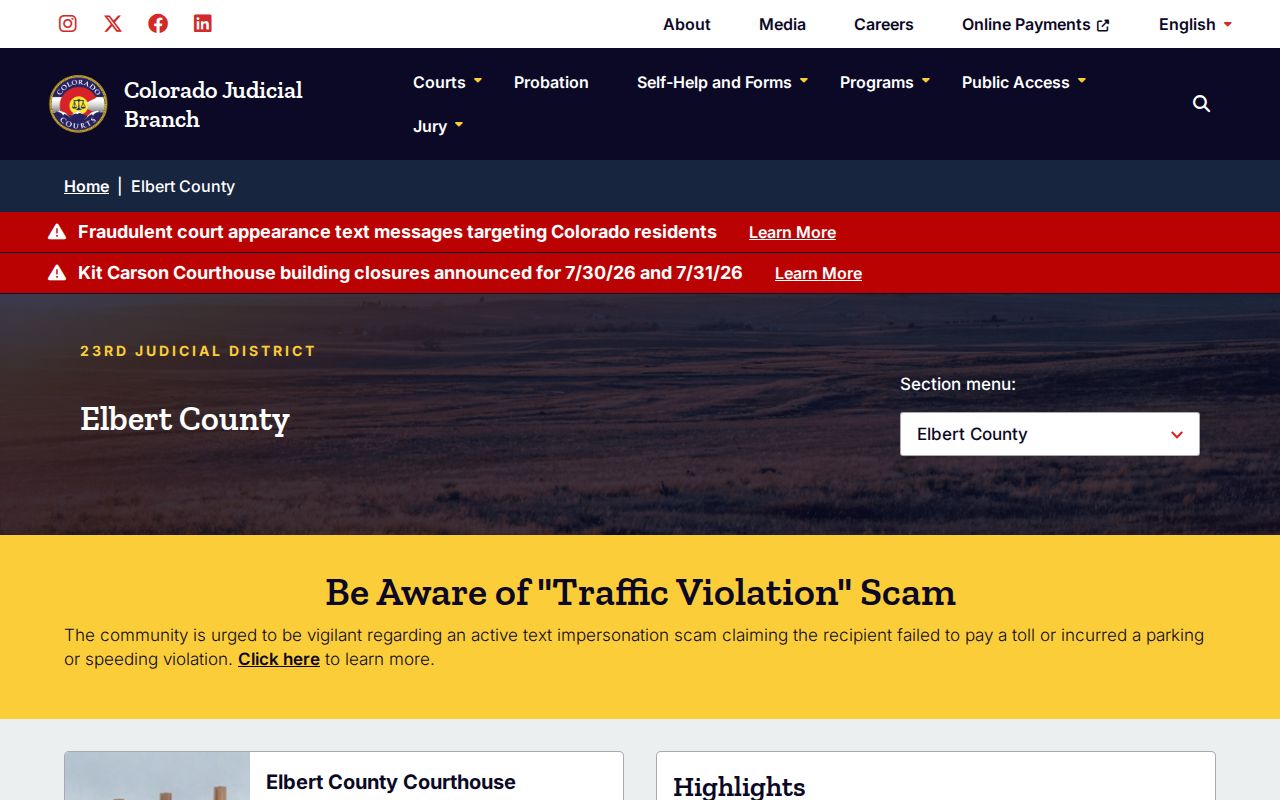
This court page confirms that the clerk, not the county's general CORA custodian, is the proper starting point for a judicial case file.
Elbert County Felony and Misdemeanor Files
The division split prevents a common search mistake. A felony file belongs in District Court, while an ordinary state misdemeanor belongs in County Court. Case numbers can include the filing year and a case-type code, such as CR for a criminal matter. The court location, division, and complete number distinguish a file from a similarly named party's matter.
The Judicial Branch's Elbert judges and staff directory identifies the local divisions and clerk.
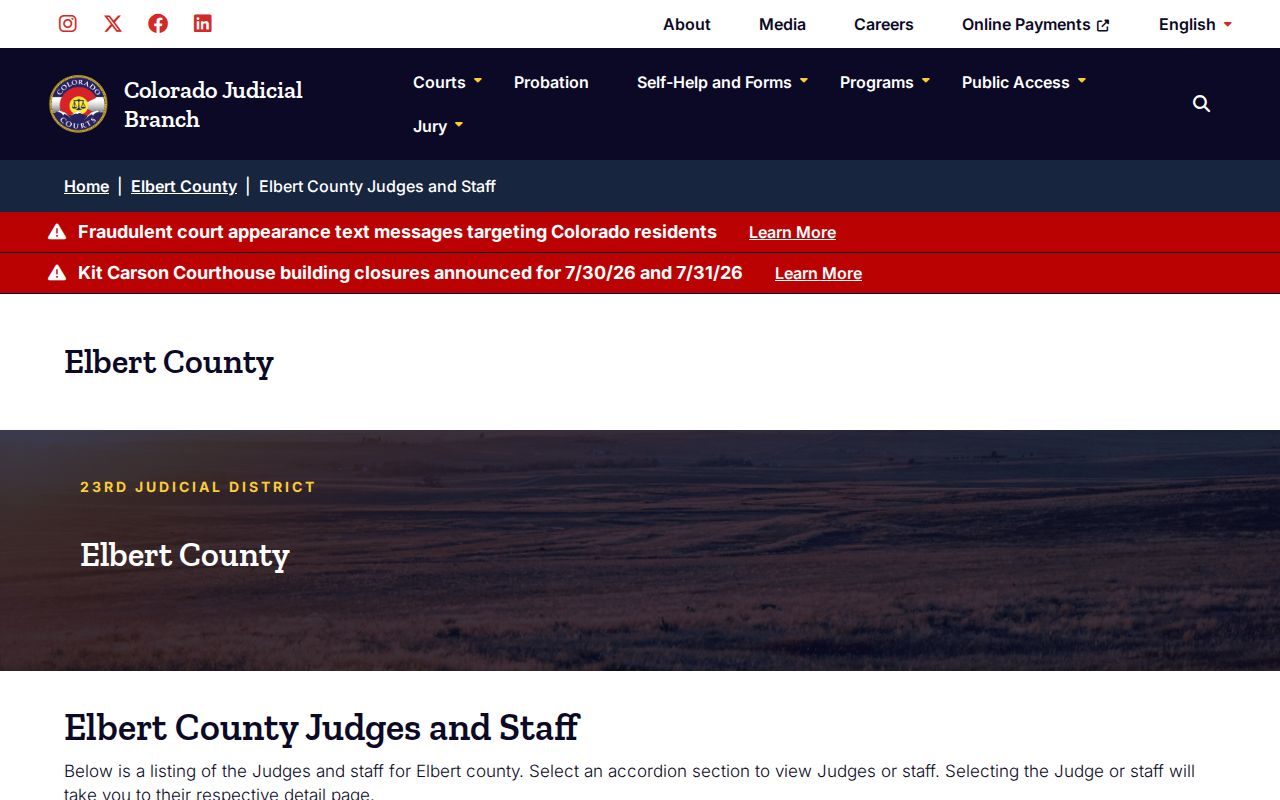
Matching the division before ordering a document helps the Elbert County clerk locate the correct record and avoids confusing municipal, county, and district proceedings.
How to Search Case Records
Use the free Colorado Judicial Branch Docket Search as an orientation tool, then move to the Elbert Combined Courts file for substance. The calendar requires a county or location and date, with at least one added filter. It can reveal a hearing and case number, but it does not supply the full charging instrument or judgment.
- Open the official docket search and select Elbert County as the location.
- Enter a date or date range, then add a name, case number, courtroom, or hearing-type filter.
- Compare the party, case number, hearing label, courtroom, and appearance method before relying on a result.
- Contact the clerk at 303-621-2131 or elbertresearch@judicial.state.co.us with the case number and party name.
- Request the Register of Action and any Complaint/Information, Disposition/Sentence Order, or certified copy needed from the official file.
| Field Label | Type | Required | Use |
|---|---|---|---|
| County/Location | Dropdown | Yes for local search | Select Elbert County |
| Date or date range | Date control | Yes | Add at least one other filter |
| Name | Text | No | Matches the public docket party name |
| Case Number | Text | No | Use year, case code, and sequence when known |
| Courtroom/hearing type | Filter | No | Narrows the calendar when available |
| Printable Version | Link | No | Renders the result list |
The Colorado Judicial docket search displays the live calendar controls.
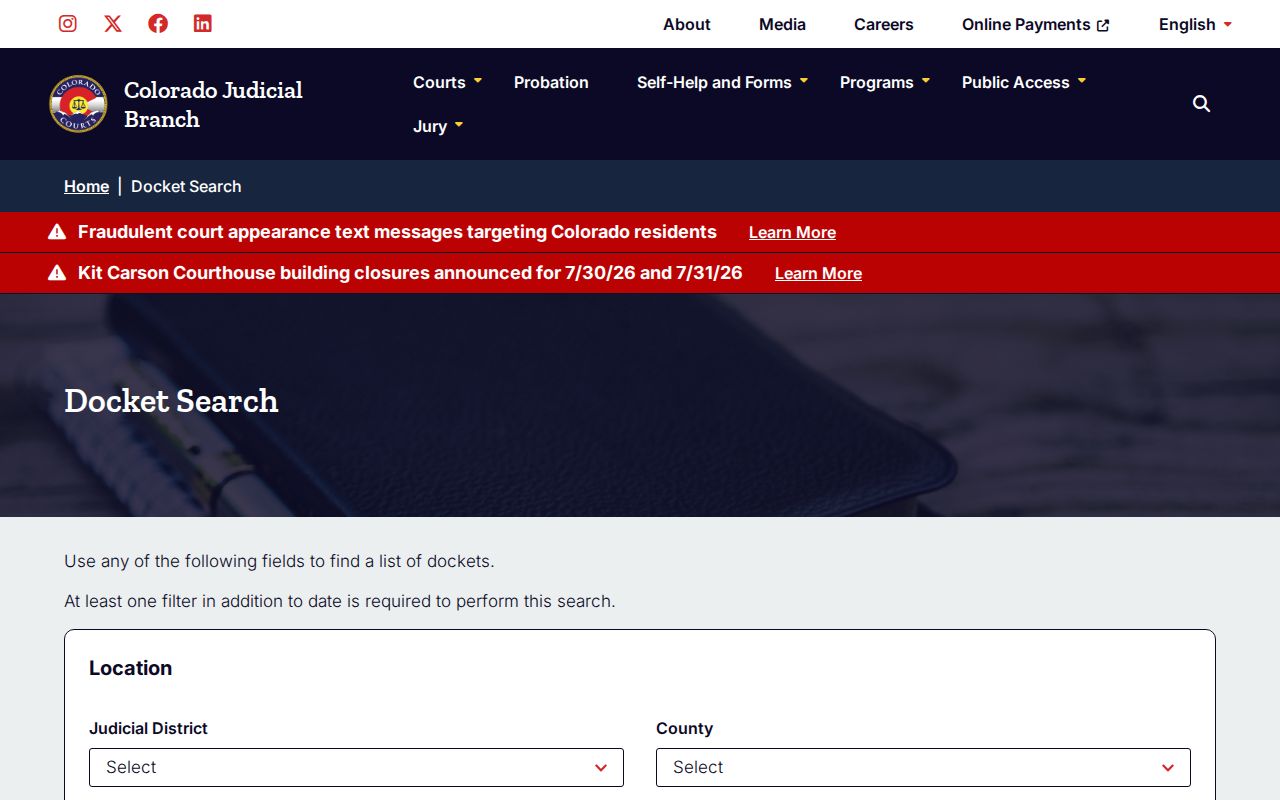
Its result is a schedule entry, so follow the Elbert County case number to the clerk rather than treating the calendar as a complete court record.
Why an Elbert County Docket Row Is Incomplete
A calendar row can show the hearing date, start time, duration, party name, case number, hearing type, location, appearance method, and courtroom. It does not show the full Complaint or Information, private identifiers, evidence, a complete disposition, or a downloadable judgment. A pending appearance also says nothing about guilt.
Older material and documents not exposed online can be requested through the Elbert research email. The Judicial Branch record request form asks for party details, filing year, county, case type, and case number if known. Published charges include $0.25 per page, a $5 name search, and $20 per certified or exemplified document. Research and redaction are $30 per hour in 15-minute increments after the first hour.
Choose a plain copy for ordinary reading and ask about certification only when the receiving office requires it. A transcript of judgment is listed at $25, a satisfaction certificate at $20, and off-site retrieval at actual cost. A party or that party's attorney has a $15 copy maximum, while that maximum does not apply to a nonparty. Statutory or directive-based waivers may apply.
What the Case File Shows
The Elbert County file connects allegations to the court's final action. Order the documents that answer the question at hand. The Register of Action maps the sequence, the charging paper states what prosecutors filed, and the disposition or sentence order supplies the result that a calendar row cannot.
| Case Number & Court | Identifies filing year, case type, sequence, county, and division. |
|---|---|
| Charging Document | The Complaint or Information states the offenses filed by the prosecutor. |
| Docket Entries | The Register of Action lists filings, settings, orders, and procedural events. |
| Hearing Dates | Shows scheduled appearances, hearing labels, location, and appearance method. |
| Disposition & Judgment | Records dismissal, plea, verdict, deferred outcome, or other final action. |
| Sentence & Conditions | States the sentence and court-ordered terms when judgment is entered. |
CBI explains how court dispositions feed the statewide history through its records and background-check hub.
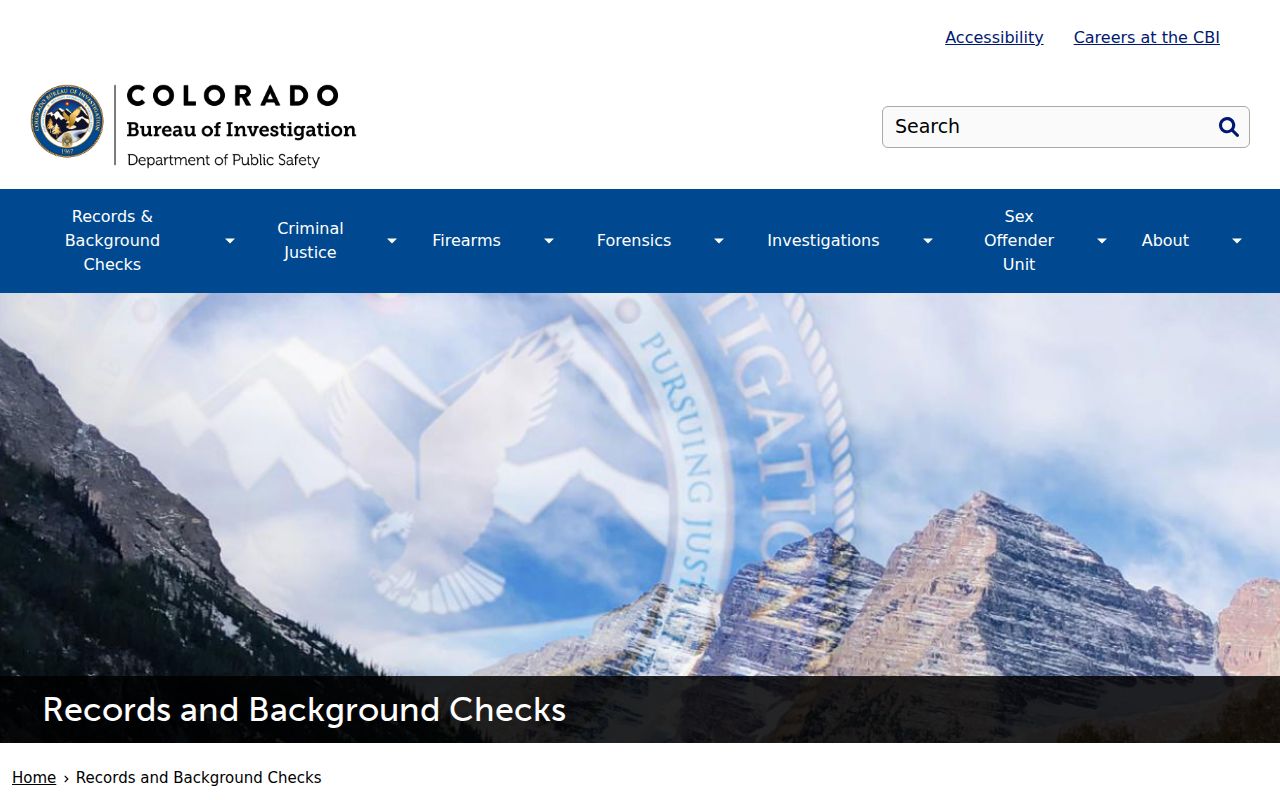
The statewide record is a separate repository view, so an Elbert County clerk order remains the authoritative way to read the filed court documents.
Elbert County's 2025 Judicial District Shift
Elbert County moved from the former 18th Judicial District into the new 23rd Judicial District in January 2025. It was Colorado's first new judicial district in more than 60 years. Current administration, district services, Webex information, and bond hearings use the 23rd District name, while older Elbert County records may retain the former district label.
Remote appearance information helps a participant reach court, but it is not a document archive. Saturday bond-hearing times have varied across official postings, so use the live Elbert County calendar instead of a cached time. Interpreter requests go to 720-437-6114 or 23interpreter@judicial.state.co.us; those services address court access and do not change what is public in the file.
The 23rd Judicial District Elbert page supplies current virtual appearance and bond-hearing information.
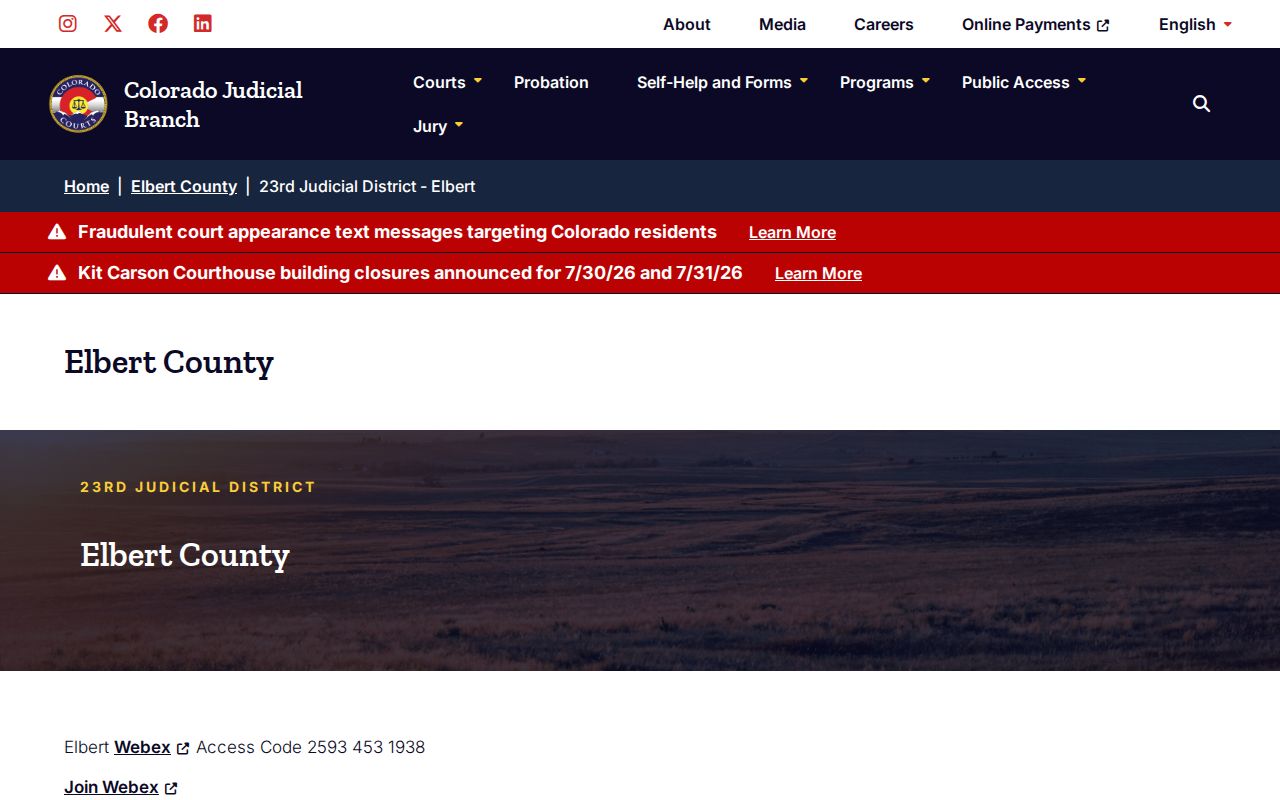
This dated transition explains why a valid older file and a current Elbert County calendar entry may display different district names.
Stages of a Criminal Case
An Elbert County prosecution may begin with arrest or summons, followed by initial appearance and a bond decision. The prosecutor files charges, the accused enters a plea at arraignment, and pretrial motions or negotiations follow. The matter then ends through a plea, trial, dismissal, or another authorized outcome before judgment and sentencing, with appeal possible afterward.
Case flow: Charges Filed › Arraignment › Pretrial › Plea or Trial › Disposition › Sentencing
Charges recorded at arrest can change before filing. A dismissal is not a conviction, and a deferred judgment is not the same as an ordinary judgment of conviction. For the original custody event, the separate Elbert County arrest history page explains the jail and agency records that precede the court file.
Reading Elbert County Case Outcomes
Read the final court order, not a lone charge label. “Pending” means the Elbert County matter has not reached a final disposition. “Dismissed” means that charge did not end in conviction. A plea or verdict must be paired with the judgment and sentence, while a deferred outcome carries terms that differ from an ordinary final judgment.
When a CBI history and Elbert County file disagree, obtain the clerk's disposition first. CBI accepts challenges and correction material through its Biometric Identification and Records Unit. Its ICHC coverage page explains that the public name report excludes warrants, sealed records, and juvenile arrests.
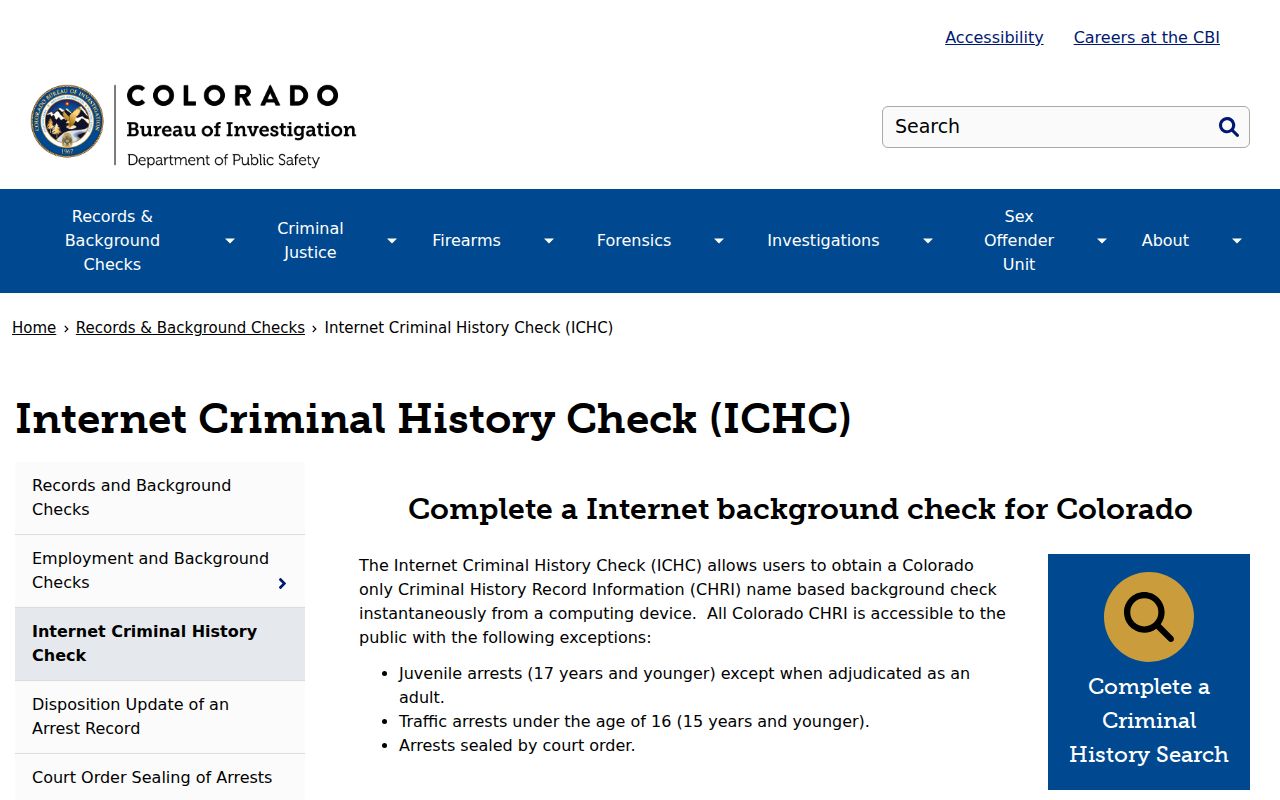
Those exclusions are why a blank or sparse CBI result cannot replace a direct Elbert County court file request.
Elbert County Criminal Bond Hearings
A bond hearing is an early stage, not the final Elbert County case outcome. The calendar may identify a bond setting, courtroom, and appearance method, while the clerk file preserves the associated orders. District pages also publish Saturday bond-court access, but official pages have displayed differing times. Confirm the current live schedule before relying on an older posting.
If the goal is to understand a bond after arrest, match the jail's custody information to the court case number and request the bond order from Elbert Combined Courts. That sequence keeps a temporary custody status from being mistaken for the filed charge or final sentence.
Access & Restrictions
Colorado court records are generally accessible under Judicial Branch rules, but sealed files, juvenile matters, protected victim information, private identifiers, and restricted documents may be absent or redacted. The Colorado Criminal Justice Records Act governs sheriff records, not the Elbert Combined Courts judicial file. Sending CORA correspondence to county administration does not order a court document.
If an Elbert County case does not appear online, contact the clerk at 303-621-2131 or elbertresearch@judicial.state.co.us. Provide the party name, case number, filing year, and case type when possible. The courthouse at 751 Ute Avenue is open weekdays from 8 a.m. to 4 p.m., except state holidays, and does not accept faxed filings.
For an Elbert County case, start any correction with the court's official disposition so the statewide repository receives the most precise source record. A sealed matter may no longer be returned through public channels, while victim details and private identifiers can be redacted even when the rest of a file remains open.