
Running a Sex Offender Check in Elbert County
Begin an Elbert County sex offender check with the Colorado Public Sex Offender Search and Notifications system, known as SOTAR. The Colorado Bureau of Investigation manages the state registry, while the Elbert County Sheriff's Office registers qualifying county residents through its Detention Division. These are linked roles, not duplicate lists. Deputies receive conviction and county-residence information, complete local registration, and track required check-ins. State and local agencies exchange data through CCIC and NCIC, then CBI controls public web dissemination.
Use a name when one is known. For place-based safety planning, select the participating jurisdiction and review the map warning before drawing conclusions from a marker. SOTAR says its data changes often and is not independently verified. Confirm a material concern with the Elbert County registered-offender office or CBI rather than treating one screen as a complete official answer.
Elbert County Registration Office
Qualifying Elbert County registrants report to the ECSO Detention Division at 751 Ute Avenue, Kiowa, Colorado 80117. Registration occurs immediately after a qualifying conviction or when a registrant establishes county residence. Depending on the governing requirement, a person reports quarterly or annually. Detention deputies monitor those duties and can route a public inquiry that cannot be resolved by SOTAR.
ECSO Detention Division
751 Ute Avenue
Kiowa, CO 80117
303-621-2027
Call before traveling if the question requires staff help. General public fingerprint cards are not offered there. ECSO fingerprint work is limited to concealed-handgun permits and sex-offender registration.
Searching the Colorado Sex Offender Registry
SOTAR places a disclaimer gate before the Elbert County registry controls. Read it. The warning explains that not every registrant is web eligible, the information is frequently updated but not independently verified, and a generalized map point may not mark a residence. The search works best as a public-safety starting point.
- Open the SOTAR search and accept its conditions only after reading the limits and lawful-use rules.
- Choose Search Offenders, then use the available person or participating-jurisdiction controls relevant to Elbert County.
- Compare names, aliases, photographs, physical traits, jurisdiction, and offense information. Do not rely on a name alone.
- Open the profile, note its status and update context, and verify urgent or uncertain information with ECSO or CBI.
| Field Label | Type | Required | Notes |
|---|---|---|---|
| I Accept / Decline | Buttons | Yes | Controls entry through the disclaimer gate. |
| Search Offenders | Navigation | Choice | Opens the public offender-search controls. |
| Select a jurisdiction | Dropdown | No | Shows a participating agency's name, address, and phone. |
| Sign In / Join | Account link | No | Used for saved-address notifications, not a required basic search. |
| Nearby Offender Notification | Address workflow | No | Sends email when a qualifying offender moves within the configured radius. |
Elbert Registry No-Result Limits
A blank SOTAR result does not mean no person is registered. Colorado law limits which registrations receive public web treatment. CBI identifies broad public categories that include sexually violent predators, adults with multiple sexual or violent felony convictions, adults failing to register for felony sex offenses, and adults convicted of felony sex offenses who register locally. The disclaimer also addresses certain adults with second or later specified misdemeanors.
Misdemeanor-only and juvenile matters have important limits. For a more complete adult list or a defined local area, CBI accepts its mailed Adult Registered Sex Offender Request Form with a fee. Fax and email are not accepted. Since September 2021, that list includes adult felony and misdemeanor registrants but excludes juvenile adjudications. Named juvenile requests require identifiers plus a written need and affirmation, and the resulting information faces strict publication and use limits.
Note: Treat a no-result as an online-scope finding, not proof that no registration exists in Elbert County.
What a Registry Profile Shows
A public profile can give enough detail to distinguish people with similar names, but the exact fields depend on lawful web eligibility and the current interface. Read labels closely. Do not infer a precise home from a randomized point or assume that a field absent from one profile does not exist in nonpublic agency records.
| Name & Aliases | Published identity names and known alternate names used for matching. |
|---|---|
| Photo & Physical Description | A photograph plus sex, race, and physical traits when the profile displays them. |
| Address or Map | The location detail legally permitted for that category; a generalized point may not be a residence. |
| Offense & Statute | Qualifying offense, statutory reference, and conviction information made public. |
| Public Category | The Colorado dissemination category, not a generic federal tier imported into state law. |
| Registration Status | Registration jurisdiction, compliance, or category information exposed by the current profile. |
Reading Elbert County Map Pins
SOTAR's disclaimer warns that a generalized or randomized map point for a person who is not web eligible does not necessarily locate that person's residence. The point must not be converted into a claim about a house, parcel, or family. Use the map to frame lawful awareness, then rely on the profile's permitted text and agency verification.
The Colorado Open Records Act information page also helps explain why public access is not the same as unlimited disclosure. Registry dissemination is governed more specifically by Colorado's registration statutes, including C.R.S. section 16-22-110. The available public view reflects those legal boundaries.
The state's official CORA material illustrates how access rules remain subject to custodian procedures and exemptions.
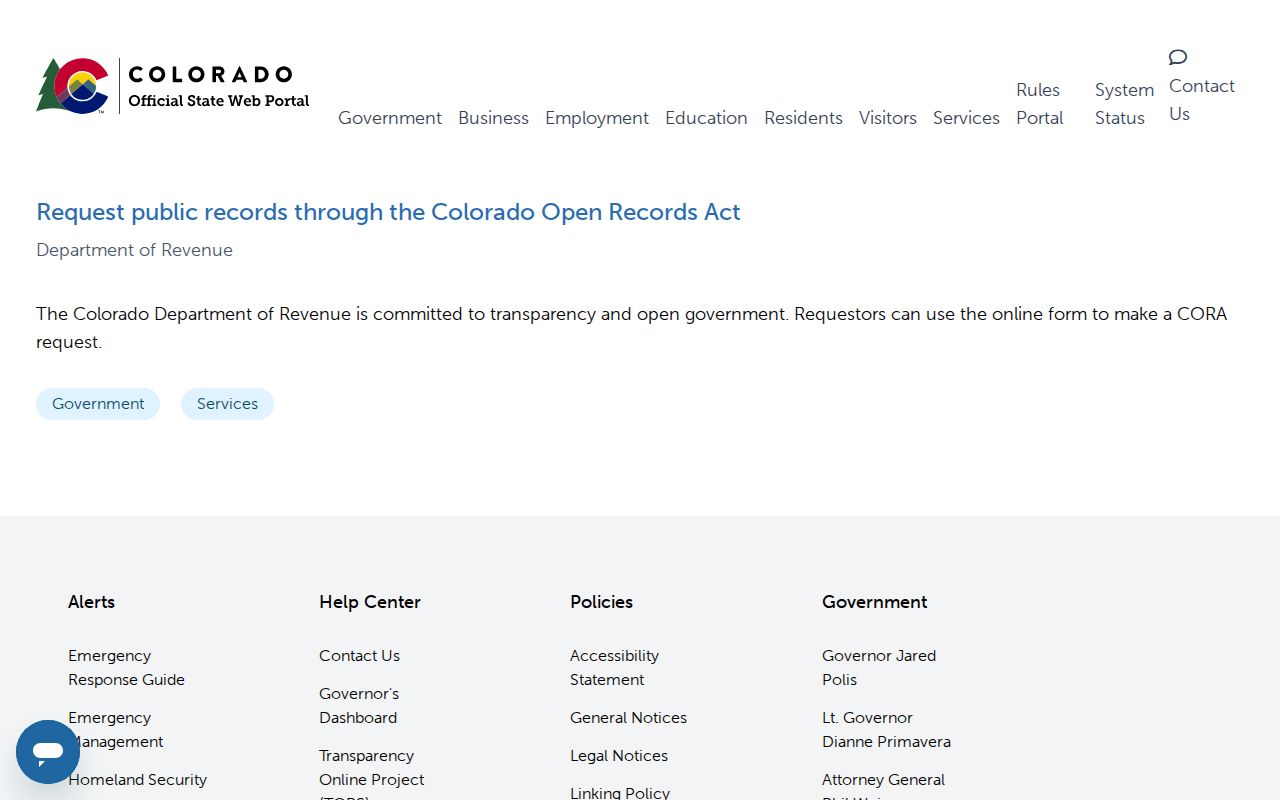
That framework supports a cautious reading of Elbert County registry data rather than assumptions beyond the disclosed record.
Registration Requirements and Levels in Colorado
Colorado does not place every registrant into a simple public Tier I, II, or III chart. Requirements turn on the conviction, statutory category, court orders, and other case facts. Elbert County publishes quarterly or annual local reporting, while the duration must be checked against the controlling statute and order. The table therefore uses verified Colorado public categories and avoids inventing fixed federal-style tiers.
| Level / Tier | Duration | Verification Frequency |
|---|---|---|
| Sexually violent predator | Set by Colorado law and the controlling case orders | Quarterly or annual as applicable |
| Adult multiple sexual or violent felony offender | Depends on conviction and statutory requirements | Quarterly or annual as applicable |
| Adult felony sex offender registered locally | Depends on statute, conviction, and any later relief | Quarterly or annual as applicable |
| Adult failing to register for felony sex offense | Underlying duty and case status control | Contact ECSO or CBI for current duty |
NSOPW Beyond Elbert County
Elbert County and SOTAR cover Colorado's participating public system. The National Sex Offender Public Website adds participating registries across state, territorial, and tribal lines. It is useful when a person recently moved, an address lies near a state border, or the relevant jurisdiction is uncertain. NSOPW does not erase each source registry's disclosure rules, so its absence is not a universal clearance.
A federal identity-history process serves a different purpose. The FBI electronic Identity History Summary channel lets a person request their own fingerprint-based national history. It is not a substitute for an Elbert County neighborhood registry check and is not a public name search.
The FBI's official request interface shows that a subject-only national record review is separate from public offender dissemination.
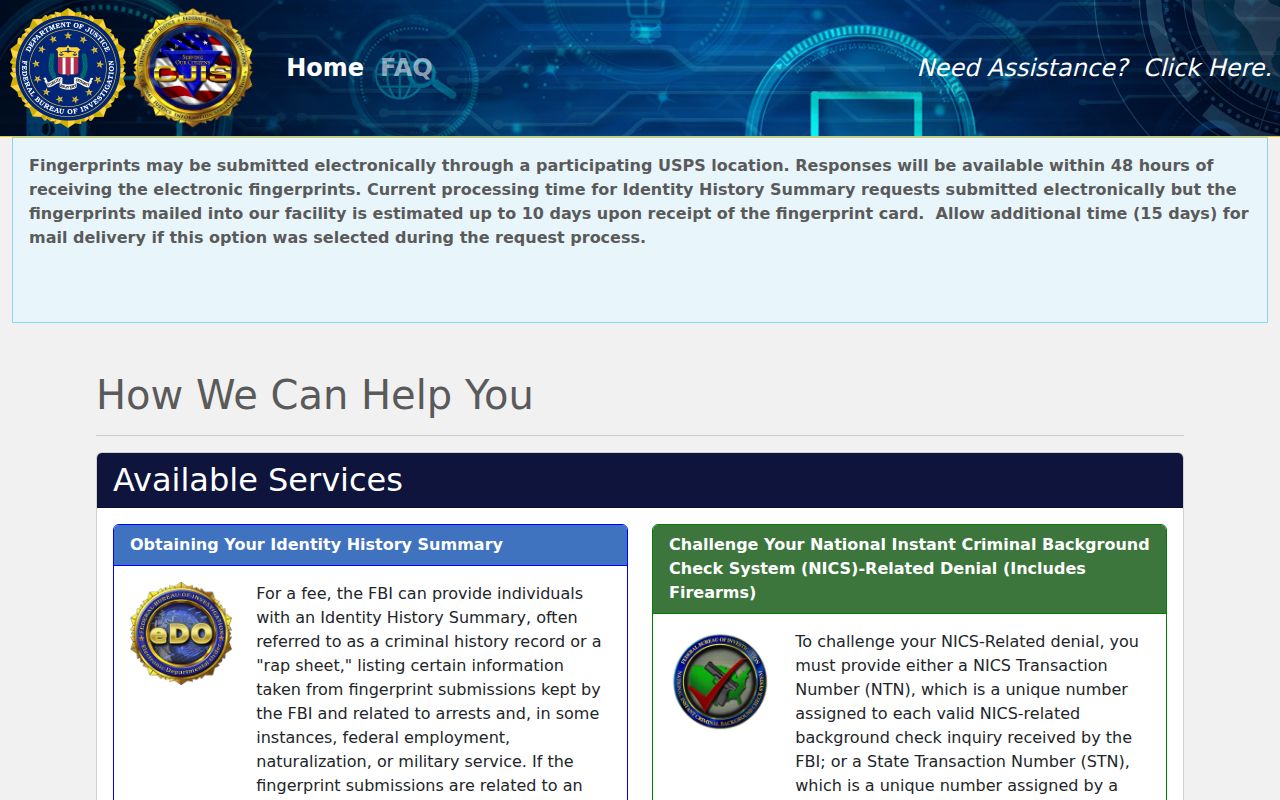
Choose SOTAR or NSOPW for public safety awareness, and use the FBI route only for one's own authorized national history review.
Elbert County Address Alerts
SOTAR offers a Nearby Offender Notification Registration workflow. A user can create an account, save an address, set the available radius, and receive email when a qualifying offender moves within it. The alert only reflects people and events eligible for that public notification system. It does not promise a full census of every registered person.
Use alerts as one part of a safety plan. Keep the saved address current, review the linked profile, and contact law enforcement when information appears urgent or inconsistent. Possible failure to register can be reported to CBI at 303-239-5732 or to ECSO. For other registry questions, the CBI Sex Offender Registration Unit is at 690 Kipling Street, Suite 3000, Denver, CO 80215, 303-239-4222, or cdps.cbi.sor@state.co.us.
Note: An email alert reflects public SOTAR eligibility and should not be treated as a complete Elbert County registry list.
Registry and Sentencing Records
A registry entry is not the complete court file. Conviction details, sentence orders, and later judicial action remain with the court, while ECSO manages local registration and CBI controls the state registry. The Colorado General Assembly's sentencing overview provides official context for how certain convictions carry sentencing rules. It should not be read as a profile-specific judgment.
The legislative material demonstrates why registry status and criminal sentencing must be checked in their own official records.
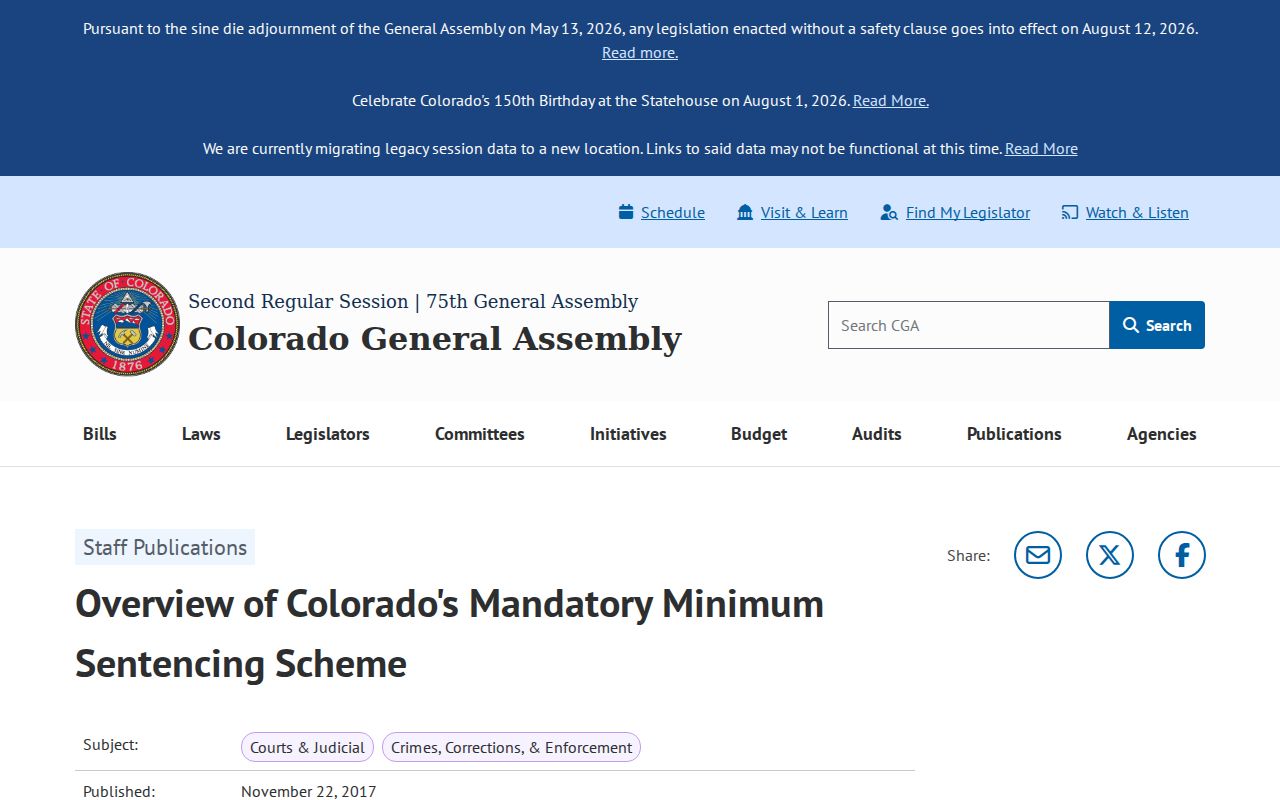
For the actual disposition or sentence in an Elbert County case, obtain the court's Register of Action and relevant orders rather than reconstructing them from a SOTAR profile.
Lawful Use and Community Notification
Registry information supports personal, family, and community safety. It does not authorize punishment. SOTAR expressly prohibits retribution, retaliation, discrimination, harassment, and additional punishment. Avoid reposting data without its limits, do not confront a listed person or household, and send a suspected violation to law enforcement. Colorado's public-dissemination rule appears in C.R.S. section 16-22-110, while misuse and false-statement penalties appear in C.R.S. section 18-9-310.5.
Misuse can be a crime: Colorado law prohibits false statements and specified misuse of registry information. C.R.S. section 18-9-310.5 allows an unclassified misdemeanor penalty of up to $1,000 per violation.